
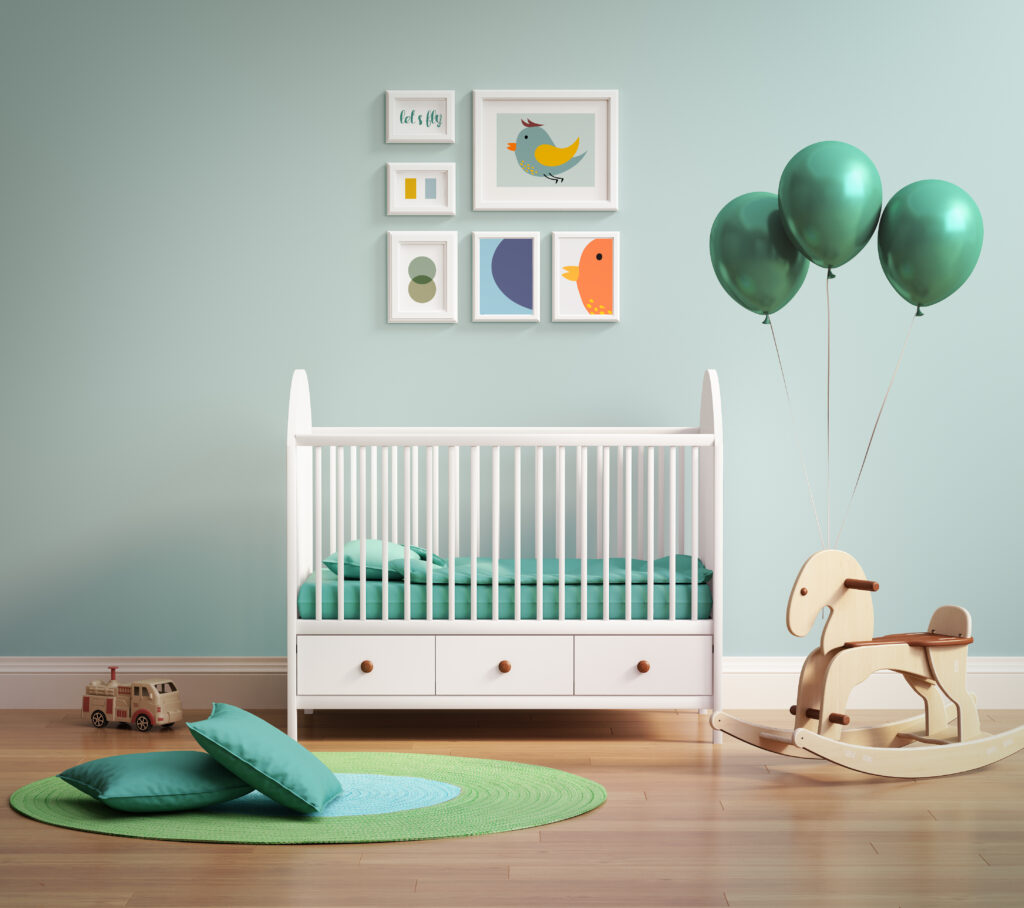
Preparing for a new baby is one of the most exciting and busy times for expecting parents. However, amid all the preparation, the most important task is often the one that gets overlooked: making sure your home is safe for your baby – even before the baby starts crawling. Many people think of safety and babyproofing only once the child is moving around but there are important safety considerations to think about before the baby is brought home, into the first few months and beyond.
According to child‑safety experts, the key elements parents prioritize when decorating the nursery including windows, cribs, and bedding tend to be areas that pose the greatest risks to a child’s safety.
As you set up your baby’s room, here are some key safety tips to guide you:
Window Safety
- Keep furniture away from windows. Never place a crib, playpen, bed, or any low-standing furniture near a window.
- Remove all corded window coverings as they could lead to accidental entanglement or strangulation. Replace them with cordless window coverings.
- Use a non-windowed wall for cribs and major furniture to eliminate unnecessary risks
Crib Safety
A crib should be sturdy, well-constructed, and compliant with current safety standards. According to the U.S. Consumer Product Safety Commission (CPSC):
- The mattress should fit snugly with no more than two fingers’ width between the mattress and the crib frame.
- Headboards and footboards should have no decorative cutouts that could trap a child’s head or limbs.
- Corner posts should not extend upward, as they can catch clothing or blankets.
- Avoid older or heirloom cribs that may not meet updated safety regulations.
Bedding
- No comforters, pillows, or stuffed animals in the crib, as they can increase the risk of suffocation.
- Use a firm mattress and a tight‑fitting crib sheet.
- While keeping the crib free of loose blankets; consider using a wearable sleep sack instead.